
Machining Services's Manufacturing Facility
Three certificates, all issued to the same legal entity, cover the plant: ISO 9001:2015 (116024/A/0001/UK/En), IATF 16949:2016 (131941/A/0001/SM/En, excludes product design under Clause 8.3), and ISO 14001:2015 (116024/B/0001/UK/En). The IATF 16949 scope is stated honestly — this is a build-to-print manufacturer.
Certifications are the cheapest pre-audit you can run, because they mean a third party already surveils the system on a schedule you did not have to pay for. ISO 9001 covers the quality management system; IATF 16949 adds the automotive-specific process controls that matter when a part feeds a vehicle program; ISO 14001 covers environmental management. The certificate numbers are verifiable, which is the whole point — a certificate you cannot check is a decoration.
How does the facility support traceability and inspection?
The plant runs an MES/ERP system that records raw material source and usage, process parameters, machine data, batch, operator, and inspection results for every lot. Inspection benches include Hexagon GLOBAL S CMMs, vision measuring machines, a gear measuring center, XRF material analysis, hardness testers, and salt-spray and tensile testers — the same class of equipment a buyer would use to audit the plant.
Traceability is a cost control in disguise. When every lot is tied to its raw material, its machine, and its operator, a non-conformance can be isolated to a single lot instead of a whole shipment. That isolation is what keeps a one-part problem from becoming a recall, and the recall is the cost the traceability prevents. For automotive and regulated buyers, this is not a convenience; it is the price of admission.
Which industries does the plant serve?
The plant machines parts for automotive, robotics, electronics, medical, and automation equipment, in aluminum, stainless steel, carbon and alloy steel, brass, copper, titanium, magnesium, and engineering plastics. Domestic and overseas customers together exceed 100, with annual output above 1,000,000 pieces.
Each industry leans on a different part of the plant. Automotive work leans on IATF 16949 process control and PPAP documentation; medical work leans on material traceability and 316 stainless; robotics and automation lean on mill-turn for complex geometry in medium volumes. A plant that serves all of them has built the systems each one requires, and those systems travel to your part whether your industry is on the list or not.
What does the plant do beyond machining?
Beyond cutting, the plant bundles surface finishing and heat treatment into the same job — anodizing, plating, powder coating, painting, brushing, and polishing, plus heat treatment. The in-house ovens reach 500 °C (fine for aluminum and low-temperature steel stress relief); titanium stress relief above that is outsourced to a qualified partner and stated as such. Sustainability is part of the operation: rooftop solar generates about 20,000 kWh of green power a month.
Bundling is a cost decision, not just a convenience. When finishing and heat treatment ride on the same job, you pay one flow and one invoice instead of a relay of vendors, and you have one party accountable when the finish is wrong. The honesty about what is in-house and what is outsourced matters more than the split — a shop that tells you titanium stress relief goes to a partner is a shop that is not hiding a handoff from you.
How does a deep workforce hold your unit cost steady?
Turnover is a hidden cost that lands in your part. When a skilled machinist leaves, the shop re-does setups, re-trains, and re-proves the process, and that time is priced into the next quote. This plant is staffed by 100+ people, over 80% of them skilled technicians, with over 60% holding five to ten years on the job. The process knowledge stays in the building, which keeps Cpk steady and unit cost predictable instead of drifting batch to batch.
Stability is a capability signal. A machinist who has run the same part family for years knows its chatter, its tool wear, and its temperature drift without re-learning them, which is why the same print comes out the same way batch after batch. The cost of that knowledge is invisible in the quote but real in the scrap rate, and it is the difference between a process that holds tolerance by capability and one that holds it by inspection.
| Plant signal | What it means for your cost |
|---|---|
| more than 100 machines under one roof | Setup amortizes fast; jobs route to the cheapest fit |
| 6,800 m² single facility | Parts move between machines, not between vendors |
| 100+ staff, 80% technicians | Deep bench absorbs peaks without outsourcing |
| Founded 2005 | Process and tooling history behind every repeat part |
How do you audit a factory before you award the work?
You do not have to fly to Dongguan to read a factory. The signals above — named equipment, verifiable certificates, a stated envelope, and a workforce that stays — are all checkable before you send a purchase order. Ask for them directly and treat a vague answer as a cost risk.
- Who is the legal entity? The registration number and address should match the certificate holder, not a shell.
- Which machines, and how many? A named mix like Mazak, Brother, Citizen, Star, and Tsugami tells you the shop can route your part, not just advertise it.
- What envelope fits? Confirm your part sits inside the milling or turning capacity without a premium setup.
- Are the certificates in one name? ISO 9001, IATF 16949, and ISO 14001 under a single legal entity is a stronger signal than three sheets from three shops.
- How deep is the bench? A stable, technician-heavy workforce holds tolerance when volume spikes.
How does the plant's location shape your landed cost?
The factory sits in Hengli Town, Dongguan, in the middle of the Pearl River Delta's machining supply chain. That location is a cost input, not a travel detail: raw material, heat treatment, plating, and freight forwarders are all within reach, which shortens the in-bound supply chain and keeps a part from spending days in transit between its own operations. A plant surrounded by its supply chain runs a shorter, cheaper logistics loop than one that must import every secondary step.
Dongguan's port and air access matter for your outbound side too. Finished parts clear through nearby sea and air freight hubs on the way to the markets this plant serves — Austria, Belgium, the Czech Republic, Denmark, France, Germany, Greece, Hungary, Ireland, Italy, the Netherlands, Spain, Sweden and the United Kingdom in Europe; Brazil, Canada, Mexico and the United States in the Americas; China, Israel, Japan, Singapore and Sri Lanka in Asia; Australia and New Zealand in Oceania; and South Africa in Africa. Our service area also spans Europe, the Americas, Asia, Oceania and Africa — based in China, we serve customers worldwide. The location does not change your freight cost to zero, and it does not change whatever duty your country applies; what it changes is the domestic logistics before the port, which is the part of the freight you can shorten by choosing the right plant location.
The honest way to use location in your arithmetic is to compare landed cost, not factory cost. Ask for the incoterm up front — EXW prices the part at the gate, DDP includes freight and import clearance to your door — so the location advantage shows up in the same line item for every supplier you compare.
What this shop actually runs
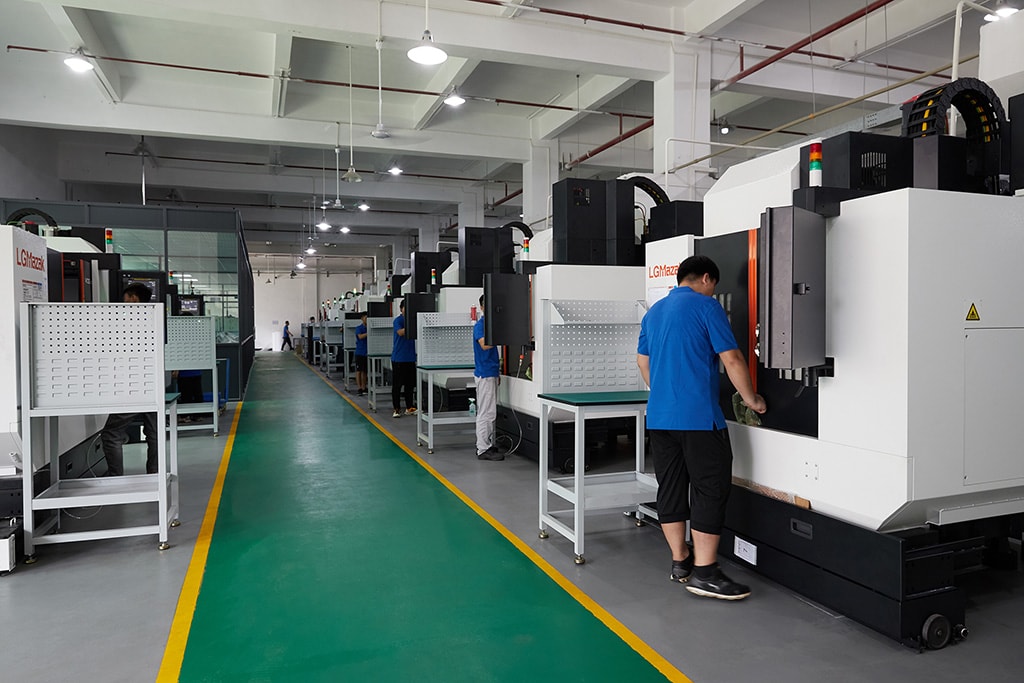
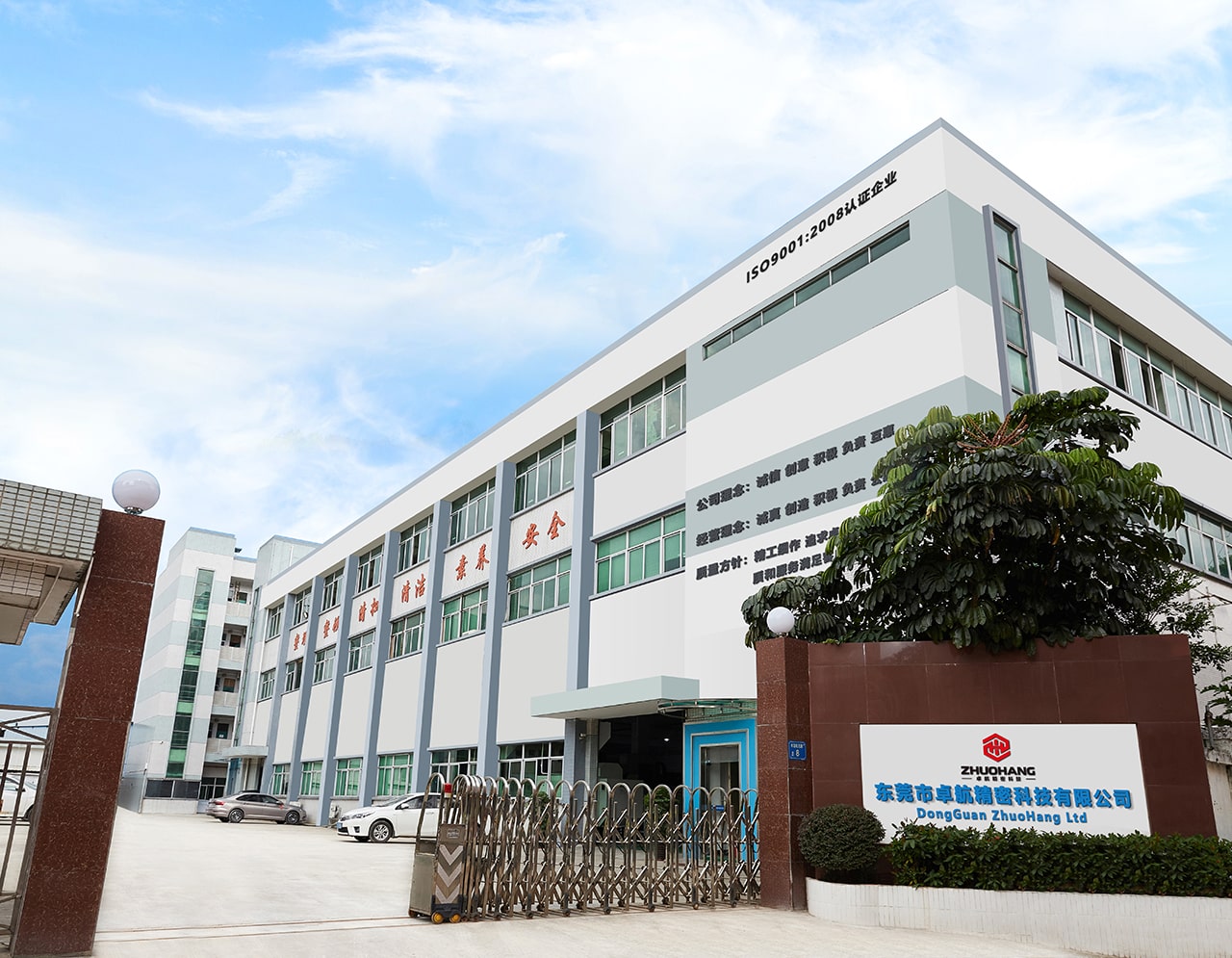
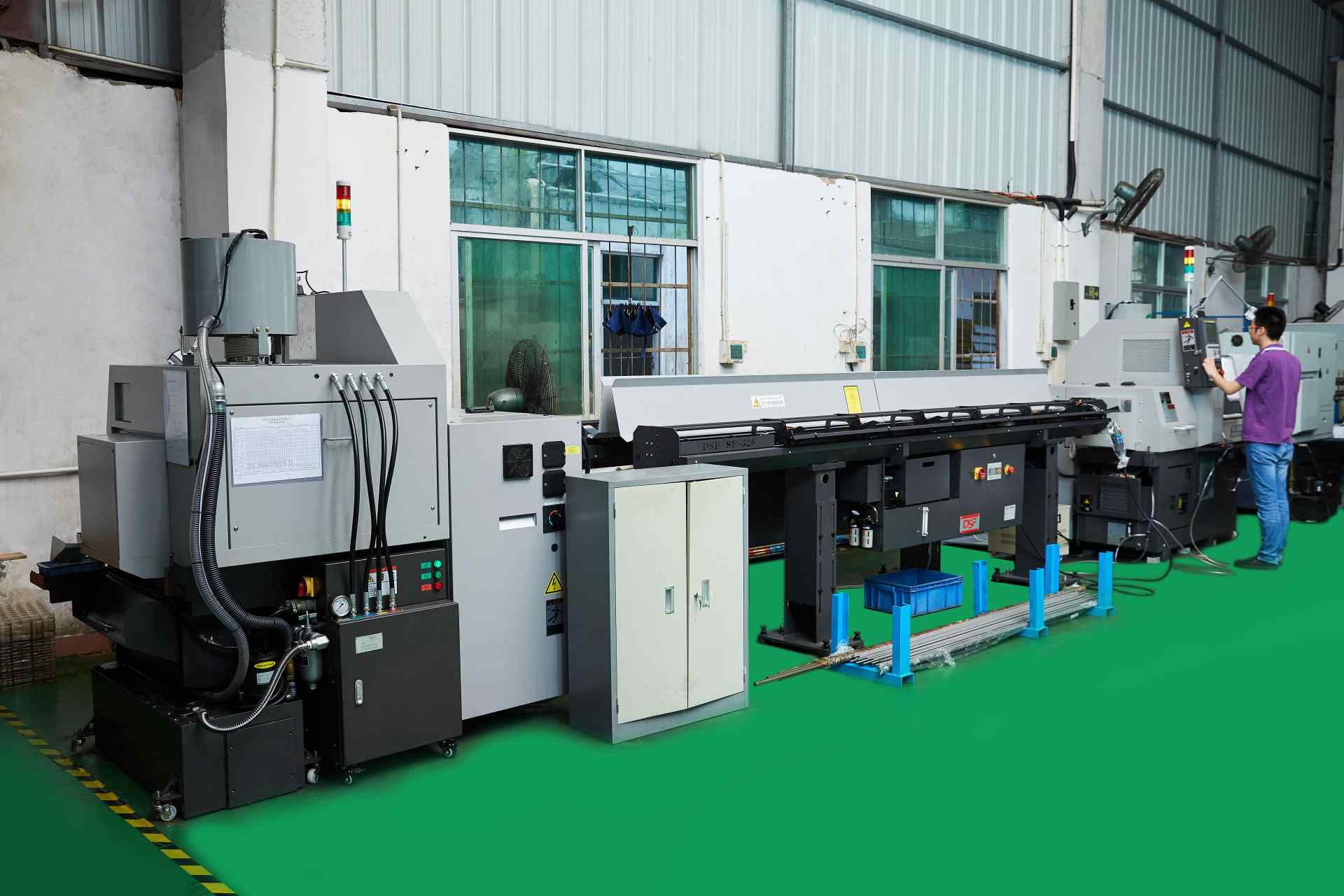
If you ask for capability evidence, you deserve a specific answer. This facility operates 100+ CNC machines across 6,800 m2 in Dongguan, China, staffed by 100+ people. The machines, listed by category:
- 5-axis machining centres (10+) - Mazak VARIAXIS I-600 (510/910/510 mm travel, 12,000 rpm, 22 kW, 71.6 N·m, 30-tool BT40) and Mazak INTEGREX I-250H S (B-axis 0.0001°, 24 kW, 124 N·m, 38-tool HSK-A63). Used on compound-angle parts, single-setup multi-face prismatic work, and aerospace fittings where datum transfer loss is unacceptable.
- 3-axis / 4-axis machining centres (50+) - Brother SPEEDIO S500Z2N / S700Z2N (10,000 rpm, 14/21-tool ATC, 0.7 s tool-to-tool, Z-axis 2.2 G) and Mazak VCE-430A L / VCE-570C L (10,000 rpm, 118 N·m, 24-tool ATC). Used on prismatic parts, plates, brackets, housings.
- Swiss-type turning centres (10+) - Citizen Cincom A20-3F7 (Φ20 mm, 10,000 rpm), TSUGAMI B0206-III / B0205-III (Φ20 mm, 0.1 µm), STAR SR-32JII / SR-32J Type N (Φ32 mm, 8,000 rpm). Used on long, slender rotational parts at ±0.002 mm.
- CNC turning centres (20+) - HEADMAN T70M/1250 (720 mm swing, 117 mm bore, 3,000 rpm, BMT75 12-station turret). Used on shafts, bushings, flanges up to ±0.002 mm.
- Wire EDM (5+) - Sodick AQ535L (550/350/300 mm travel, ±20° taper, 800 kg workpiece). Used on hardened tool steel, internal splines, sharp internal corners that milling cannot reach.
- Inspection: Hexagon CMM + 20+ gauges - Hexagon CMM for coordinate measurement, plus vision system, profilometer, hardness tester, coating thickness gauge, XRF for material verification. The 10:1 rule (gauge 10x more accurate than the band) is applied to every feature.
- Machine highlights - VARIAXIS I-600: one-setup multi-face 5-axis + MAZA-CHECK auto-calibration; INTEGREX I-250H S: DONE-IN-ONE mill-turn, B-axis 0.0001° + Ai thermal shield; SPEEDIO S500Z2N / S700Z2N: Z-axis 2.2 G + 0.7 s ATC; Swiss-type: guide-bush switchable + 0.1 µm resolution.
Tolerance bands: ±0.003 mm milled, ±0.002 mm turned, ±0.002 mm ground or wire-cut. Capability indices: Ppk >= 1.67 at the initial study; Cpk >= 1.33 ongoing in production.
Certifications: ISO 9001:2015 (116024/A/0001/UK/En) · IATF 16949:2016 (131941/A/0001/SM/En, design clause 8.3 excluded) · ISO 14001:2015 (116024/B/0001/UK/En), held by Dongguan Zhuohang Ltd (USCC 91441900MA4UWT6X39, since 2005).
Service area: we supply Austria, Belgium, the Czech Republic, Denmark, France, Germany, Greece, Hungary, Ireland, Italy, the Netherlands, Spain, Sweden and the United Kingdom in Europe; Brazil, Canada, Mexico and the United States in the Americas; China, Israel, Japan, Singapore and Sri Lanka in Asia; Australia and New Zealand in Oceania; and South Africa in Africa, with worldwide delivery from China.
Contact: Felipe Iglesias, [email protected], +86 13126536955.
Ready to machine your parts?
Send your drawing to [email protected] or call +86 13126536955 for a quote.
Frequently Asked Questions
Who is the legal entity behind the factory?
In short, The manufacturer is Dongguan Zhuohang Ltd, brand Zhuohang Precision Machining Factory, operating since 2005 from No. 8, Shuibian Songyuan Road, Hengli Town, Dongguan, Guangdong, China 523470 — 6,800 m² and a hundred-odd machines that keep unit cost low.
What certifications does the factory hold?
ISO 9001:2015 (116024/A/0001/UK/En), IATF 16949:2016 (131941/A/0001/SM/En), and ISO 14001:2015 (116024/B/0001/UK/En) — three certificates under Dongguan Zhuohang Ltd, with IATF 16949 excluding design under Clause 8.3.
How large is the factory and its workforce?
The plant covers 6,800 m² and runs 100+ production machines, staffed by 100+ people — over 80% skilled technicians and over 60% with five to ten years on the job, which keeps unit cost stable and predictable.
What machine brands run on the floor?
The floor's machine mix is chosen for cost: Mazak and Brother carry milling and mill-turn, while Citizen, Star, and Tsugami Swiss-type lathes handle small slender parts — each family matched to the work it does most economically.
What is the largest workpiece the factory can machine?
Milling runs up to 1300 × 700 × 600 mm and turning up to Ø720 × 1280 mm, at ±0.003 mm on CNC milling, ±0.002 mm on CNC turning and ±0.002 mm for grinding — an envelope that fits most parts without a premium setup.
What is the factory registration number?
The registration number is 91441900MA4UWT6X39, held by Dongguan Zhuohang Ltd — the same legal entity named on all three certificates, so the address, the registration, and the certifications line up under one name.
Continue reading: Machining Services · 3 Axis Machining Services · 4 Axis Machining Services
Standards referenced on this page
- ASTM A582/A582M-12 — Standard Specification for Free-Machining Stainless Steel Bars
- IATF 16949:2016 — Automotive quality management system standard
- ASTM B348/B348M-21 — Standard Specification for Titanium and Titanium Alloy Bars and Billets